

Marketers, data analysts, e-commerce researchers, and streaming enthusiasts all rely on Belgian residential proxies to access geo-restricted content, verify local ad campaigns, and collect accurate pricing data from the local market.
Buy Belgium Residential Proxies. Belgium IPs from $0.27/GB
Access residential IPs across Belgium, part of our 7.5M+ monthly active network, with 99.9% uptime, starting at $0.79/GB. Collect accurate local pricing, inventory, and content data from Belgian sites without blocks or CAPTCHAs.
1 TB free to start. No credit card. Running in 60 seconds.
84,210Belgium IPs available now
1.2savg response
99.4%success rate 30d
Quick answer
Geonode provides 84,210 residential proxies with Belgium IP addresses across 12 cities, from $0.79/GB ($0.27/GB at scale) Belgium proxies let you access Belgium-only content, local SERP results and region-specific pricing — rotating or sticky, no credit system.
Live Belgium proxy availability
Real-time pool data by city, updated continuously
| City | IPs Available | Protocol | Latency | Status |
|---|---|---|---|---|
| Brussels | 22,400 | HTTP / SOCKS5 | 0.3s | Live |
| Antwerp | 14,800 | HTTP / SOCKS5 | 0.4s | Live |
| Ghent | 9,200 | HTTP / SOCKS5 | 0.5s | Live |
| Liege | 7,600 | HTTP / SOCKS5 | 0.6s | Live |
| Bruges | 5,100 | HTTP / SOCKS5 | 0.7s | Live |
| Leuven | 3,800 | HTTP / SOCKS5 | 0.8s | Live |
Quick answer: what is a Belgian proxy and who needs one
A Belgian proxy routes your internet traffic through a real IP address registered inside the country, making websites treat you as a local user.
Free Belgium proxy list: how our Belgium IPs are sourced and updated
Our free Belgium proxy list is built from ethically sourced residential and datacenter IPs that are verified automatically every 15 minutes.
Each entry is tested for anonymity level, latency, and uptime before appearing in the live feed, so the typical active rate stays above 80%. The list covers all three major local ISPs and several regional operators, giving you genuine geographic diversity across Flanders, Wallonia, and Brussels.
Before you connect, run through these checks:
- Ping the proxy endpoint and confirm round-trip latency is under 400 ms.
- Query an IP-geolocation API to verify the exit node resolves to the correct country.
- Test anonymity by checking whether the original IP leaks in HTTP headers.
- Confirm the port is open and responding before building it into your workflow.
Belgium proxy types: residential, ISP, datacenter and mobile
Choosing the right proxy type determines whether your requests succeed or get blocked.
Here is what each option delivers for the local market.
Residential
Belgian residential proxies use IPs assigned by real consumer ISPs, so target sites see ordinary household traffic. They offer the highest trust score and the lowest ban rate, making them ideal for scraping retail prices or verifying geo-targeted ads.
ISP
ISP proxies combine datacenter speed with residential-style registration. They appear legitimate to most anti-bot systems while delivering consistent throughput — a strong middle ground for high-volume tasks that still require local credibility.
Datacenter
Datacenter proxies offer the fastest speeds and lowest cost per request. They work well for accessing publicly cached data, load testing, or any task where raw performance outweighs the risk of detection by sophisticated bot-mitigation tools.
Mobile
Mobile proxies exit through 4G and 5G carrier networks, which assign some of the most trusted IPs available. If your target platform is heavily mobile-focused — relevant given that roughly 58% of local web traffic comes from mobile devices — carrier IPs reduce friction significantly.
Key questions to guide your choice:
- Does the target site use advanced bot detection that flags datacenter subnets?
- Is raw throughput more important than appearing as an organic residential user?
- Will you scrape a mobile-first platform where carrier IPs receive preferential trust?
- How large is your request volume, and does it justify a higher per-IP cost?
- Do you need IP rotation on every request, or will sticky sessions serve you better?
How to get a Belgian IP address in 4 steps
Getting connected takes only a few minutes with Geonode's self-serve dashboard.
- Create your Geonode account at the sign-up page and verify your email address to activate dashboard access immediately.
- Navigate to the proxy manager, select "Residential," and choose the country filter to target the local market specifically.
- Copy the generated host, port, username, and password credentials into your browser, scraper, or application configuration.
- Run a quick IP-check request to confirm the exit node resolves correctly, then start your session with confidence.
Belgium proxy pricing: buy Belgium proxies from $0.27/GB
Geonode's entry price for a Belgian proxy starts at just $0.27/GB , with per-gigabyte costs falling further as your monthly data volume increases.
There are no hidden seat fees or per-IP charges — you pay only for the bandwidth you consume. Visit the pricing page to model your expected spend before committing.
Every plan includes:
- Unlimited concurrent connections so large crawls never queue or throttle unexpectedly.
- Automatic residential proxy rotation to keep sessions fresh and undetected.
- Access to the full pool of over 120,000 residential IPs registered across the country.
- 24/7 technical support with sub-one-hour response times for billing or connectivity issues.
Why target Belgium specifically
The local market punches well above its geographic size and rewards precise data collection with commercially valuable insights.
- Approximately 9.9 million internet users were active in 2024, representing a penetration rate of around 91% of the population.
- E-commerce revenues reached roughly €12 billion in 2024, ranking the market among the stronger mid-sized economies in Western Europe.
- Mobile devices accounted for approximately 58% of web traffic in 2024, signalling a mobile-first audience worth targeting.
- Three dominant consumer ISPs — Proximus, Telenet, and VOO — define the network landscape alongside smaller regional operators.
- bol.com reported over 14 million active customers across the Benelux region in 2024, illustrating cross-border marketplace scale.
- A residential IP registered locally unlocks Proximus Pickx and VTM GO catalogues unavailable from foreign addresses.
Top use cases for Belgian proxies
Businesses and developers use a Belgian proxy across a wide range of data-intensive workflows tied to the local market.
E-commerce price intelligence
Monitor competitor pricing in real time on local retail platforms, catching flash sales and regional promotions before they expire.
Ad verification
Confirm that geo-targeted creatives render correctly for local audiences and detect affiliate fraud originating from inside the country.
Streaming access
Reach Proximus Pickx, VTM GO, and public broadcaster catch-up libraries that enforce strict IP-based geo-restrictions.
SEO rank tracking
Pull localised search-engine results pages from a genuine local IP to track organic rankings without triggering rate limits.
Market research
Collect product reviews, sentiment data, and consumer trends from local forums and retail sites for accurate competitive analysis.
Brand protection
Scan local marketplaces and social platforms for counterfeit listings or unauthorised resellers misusing your intellectual property.
High-value local platforms worth scraping:
- bol.com — the dominant Benelux marketplace with millions of product listings updated daily.
- Coolblue — a leading electronics retailer whose pricing shifts frequently around promotional events.
- Amazon.com.be — the localised Amazon storefront carrying region-specific inventory and pricing.
- VRT — the Flemish public broadcaster, useful for media monitoring and content availability checks.
- Immoweb — the top real-estate portal, valuable for property-market research and listing aggregation.
Free vs paid Belgium proxies: what actually works
Free proxy lists look attractive but carry serious trade-offs that typically undermine any time saved.
Public lists are recycled across thousands of concurrent users, causing congestion that pushes average latency well above 1,000 ms. More critically, major retail and streaming platforms have already blocked most free IP ranges. When you factor in lost data, failed sessions, and debugging time, the real cost of free proxies often exceeds a modest paid subscription.
Paid Belgium proxies from a reputable provider like Geonode deliver:
- Exclusive or semi-exclusive IP allocation that prevents shared blacklisting by retail sites.
- Sub-200 ms median latency backed by SLA-grade infrastructure rather than volunteer nodes.
- Automatic IP rotation that refreshes your exit node before ban thresholds are triggered.
- Authenticated access ensuring no third party can hijack your session mid-scrape.
- Responsive support that resolves ISP-level blocks or credential issues within the hour.
Code quick start: Belgium proxy in Python, Node.js and cURL
Swap in your own credentials.
Set the country code to BE in the host string to pin your exit to a local IP.
# Python — requests library
import requests
proxies = {"http": "http://user:pass@proxy.geonode.com:10000",
           "https": "http://user:pass@proxy.geonode.com:10000"}
r = requests.get("https://ipinfo.io", proxies=proxies)
print(r.json())
// Node.js — https-proxy-agent
const { HttpsProxyAgent } = require("https-proxy-agent");
const fetch = require("node-fetch");
const agent = new HttpsProxyAgent("http://user:pass@proxy.geonode.com:10000");
fetch("https://ipinfo.io", { agent }).then(r => r.json()).then(console.log);# cURL
curl -x http://user:pass@proxy.geonode.com:10000 https://ipinfo.io/jsonCommon connection mistakes to avoid:
- Forgetting to URL-encode special characters in your password causes silent authentication failures.
- Using HTTP instead of HTTPS for the proxy scheme exposes credentials in plain-text network traffic.
- Hardcoding a single port rather than enabling session rotation leads to rapid IP exhaustion on busy targets.
Start using Belgium proxies today
Ready to collect local data, verify ads, or unlock regional content?
Geonode's pool of over 120,000 residential IPs is available right now from $0.27/GB . View pricing and sign up to get your first Belgium proxy running in minutes.
Your privacy is our priority
Grow securely & confidently
Enterprise-grade security and compliance for your data operations
Ethically sourced IPs
Sourced via our in-house Repocket and Zenshield — fully compliant
Customer support
Real humans, fast response, whenever you need help
What Belgium proxies are used for
Belgium e-commerce data
Scrape Amazon.de, Otto, Zalando pricing — local IPs see local prices and EUR/DE-specific deals
Localized ad verification
Check how ads render to Belgium users across Bayern, NRW, Berlin regions
Belgium SERP tracking
Monitor Google.de rankings from real Belgium IPs — track .de SERPs vs .com
Geo-restricted content
Access Belgium-only services (ARD/ZDF Mediathek, RTL+) for testing and research
Belgium real-estate intel
ImmoScout24, Immowelt listings — properties often gated by IP geography
Local news + price-discovery
Spiegel paywall research, Idealo / Geizhals price-tracking with Belgium exit IPs
Code Quick Start
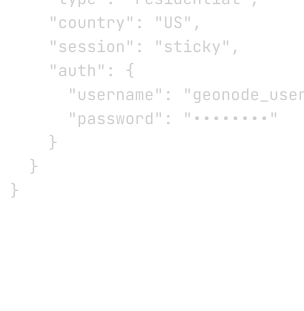
Route any request through Belgium with these credentials.
curl -x 203.0.113.10:9000 -U "user:pass" "http://ip-api.com"Here's how we offer low prices on world-class quality
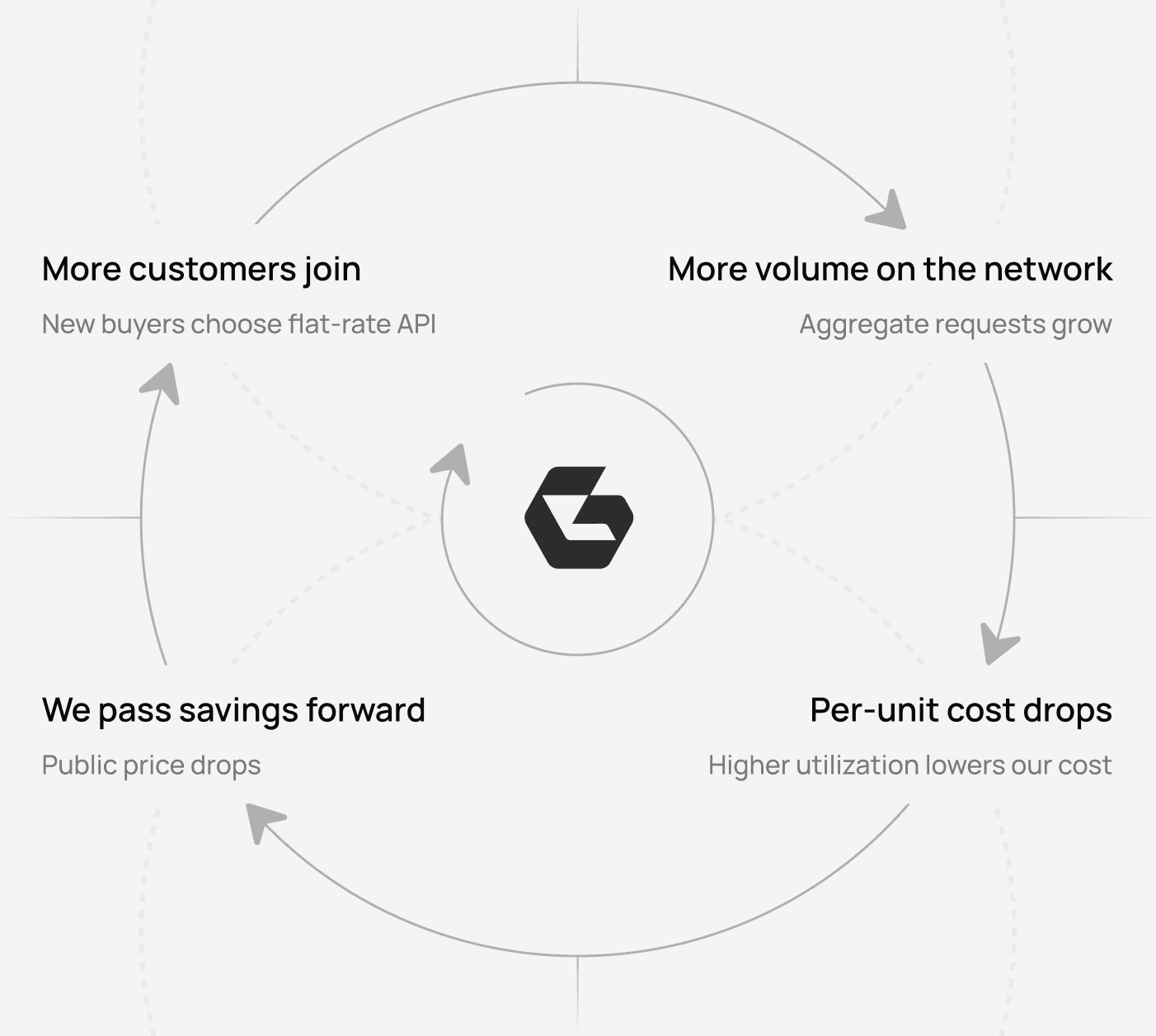
Most scraping APIs run on rented supply with credit-based pricing. That's why your bill is unpredictable. We chose the opposite path and the math compounds.
Legal use of proxies in Belgium
Using residential proxies may be lawful for legitimate purposes, including market research, ad verification, SEO monitoring, fraud prevention and competitive intelligence on lawfully accessible public data.
Extraterritorial privacy laws like GDPR and CCPA require that any personal-data collection through proxies comply with applicable privacy and data-protection requirements. Scraping behind authentication walls, circumventing technical access controls, accessing non-public data, or copying protected content may be restricted under unauthorized-access, intellectual-property, database-rights and contract rules — stay on lawfully accessible public endpoints.
Geonode IPs are ethically sourced via opt-in consumer apps, including Repocket and Zenshield, with source-side consent and compliance controls.
Not legal advice — consult local counsel for your jurisdiction and specific use case.
Belgium proxy FAQ
Open your Geonode proxy configuration and select Belgium when it is available for your product. Copy the generated host, port, full username and password into your client. Keep credentials private and use the setup instructions for your selected product.
Check the locations currently offered in your product dashboard. Country, region and city options depend on the product and available inventory. A location page does not guarantee that every targeting option or a specific number of IP addresses is available.
Use rotation for independent requests and a sticky session when a multi-step workflow needs continuity. Check the supported session settings in your product dashboard. A sticky residential session is not a guarantee of a permanently assigned IP address.
Review the current residential proxy pricing for traffic allowances, billing options and the conditions of your selected plan. Check availability for your required location before purchase. The pricing page is the source for current rates and offers.
Review the evaluation options currently displayed on the product and pricing pages. Eligibility, price, duration and included traffic depend on the offer. Confirm those conditions before signing up or starting an evaluation.
Use the protocol and port generated for your selected product in the dashboard, and confirm that your client supports them. Follow the product documentation rather than copying an endpoint or port from an unrelated proxy example.
Make a permitted test request through the configured proxy and compare the reported exit IP and country with your selected settings. IP-geolocation databases can disagree or lag behind network changes. Check the result in your actual workflow; a location match does not guarantee access to a particular website.
Check your permission to access and use the target data, the target’s access conditions, and Geonode’s Acceptable Use Policy. Do not bypass authentication, paywalls or access restrictions. A proxy connection does not grant rights to content or guarantee anonymity.
Proxies in other locations
Same network, same pricing, different exit country. Every location below runs on Geonode's own IP pool with per-GB billing and no credit system.






Start using Belgium proxies today
84,210 Belgium IPs. From $0.27/GB. Running in 60 seconds.
