


Marketers, researchers, e-commerce operators, and developers use a proxy in Mauritius to access geo-restricted content, verify local ads, and gather accurate on-island pricing data.
Buy Mauritius Residential Proxies. Mauritius IPs from $0.27/GB
Access residential IPs across Mauritius, part of our 7.5M+ monthly active network across 150+ countries, starting at $0.79/GB with 99.9% uptime. Collect localized pricing, content, and market data from Mauritius-based platforms without blocks or detection.
1 TB free to start. No credit card. Running in 60 seconds.
84,210Mauritius IPs available now
1.2savg response
99.4%success rate 30d
Quick answer
Geonode provides 84,210 residential proxies with Mauritius IP addresses across 12 cities, from $0.79/GB ($0.27/GB at scale) Mauritius proxies let you access Mauritius-only content, local SERP results and region-specific pricing — rotating or sticky, no credit system.
Live Mauritius proxy availability
Real-time pool data by city, updated continuously
| City | IPs Available | Protocol | Latency | Status |
|---|---|---|---|---|
| Port Louis | 22,400 | HTTP / SOCKS5 | 0.4s | Live |
| Beau Bassin-Rose Hill | 11,800 | HTTP / SOCKS5 | 0.5s | Live |
| Vacoas-Phoenix | 9,300 | HTTP / SOCKS5 | 0.6s | Live |
| Curepipe | 7,100 | HTTP / SOCKS5 | 0.7s | Live |
| Quatre Bornes | 5,600 | HTTP / SOCKS5 | 0.8s | Live |
Quick answer: what is a Mauritian proxy and who needs one
A Mauritian proxy routes your traffic through a real residential IP address registered in Mauritius, making websites see you as a local user.
Free Mauritian proxy list: how our Mauritius IPs are sourced and updated
Our free Mauritius proxy list is compiled from ethically sourced residential and datacenter nodes distributed across the island's major ISPs.
The list refreshes every 10–15 minutes, and live availability typically holds at 85–95% at any given moment. Before relying on a free IP, always validate it yourself to avoid bans or data leaks.
- Ping each proxy endpoint to confirm it responds within a reasonable timeout window.
- Use a geo-check tool to verify the returned IP is genuinely registered in Mauritius.
- Test HTTPS tunnelling to ensure the proxy supports encrypted traffic without stripping headers.
- Run a DNS-leak check so your real resolver address does not escape through the tunnel.
Mauritius proxy types: residential, ISP, datacenter and mobile
Choosing the right proxy type determines success or failure for any data project.
Each type carries distinct speed, trust, and cost trade-offs worth understanding before you buy.
Residential
Our Mauritian residential proxies use IPs assigned directly by local ISPs to real households. They carry the highest trust score with websites, making them ideal for bypassing sophisticated anti-bot systems and accessing geo-locked OTT catalogues.
ISP
ISP proxies combine datacenter speed with genuine ISP registration, giving you fast, stable connections that still appear residential. They suit tasks requiring consistent throughput, such as bulk ad verification or continuous price monitoring on local retail platforms.
Datacenter
Datacenter proxies offer the lowest latency and highest bandwidth but originate from commercial hosting ranges, so aggressive anti-bot systems may flag them. They are best for internal testing, load simulations, or scraping targets with minimal bot protection.
Mobile
Mobile proxies route traffic through 4G/LTE connections on the island, closely mimicking real smartphone users. Given that mobile devices account for approximately 65% of web traffic locally, mobile IPs are especially convincing for social-media automation and app testing.
- Pick residential IPs when target sites employ advanced fingerprinting or CAPTCHA challenges.
- Choose ISP proxies when you need stable long-session connections at competitive bandwidth costs.
- Use datacenter proxies for internal staging environments where detection risk is low.
- Opt for mobile proxies when testing apps or scraping platforms dominated by smartphone users.
- Consider rotating IP rotation regardless of type to avoid rate-limiting at scale.
How to get a Mauritian IP address in 4 steps
Getting online with a local IP address takes only a few minutes.
Follow these four steps to connect through our pool of over 8,000 residential IPs.
- Create a free Geonode account, verify your email, and navigate to the dashboard to access proxy credentials and configuration settings.
- Select Mauritius as your target country and choose your preferred proxy type — residential, ISP, datacenter, or mobile — based on your use case.
- Copy the generated hostname, port, username, and password, then paste them into your browser, scraper, or custom application configuration.
- Confirm your new IP by visiting a geo-lookup service; the result should show a local Mauritian location before you begin your project.
Mauritian proxy pricing: buy Mauritius proxies from $0.27/GB
Entry-level access to our Mauritius proxy network starts at just $0.27/GB , making it one of the most cost-efficient ways to get a genuine local IP address on the island.
As your data volume grows, per-gigabyte rates decrease further under our tiered plans — the more bandwidth you commit to, the lower the effective cost per project. All plans include unlimited concurrent connections, sub-second response times, and 24/7 technical support. Visit our pricing page to compare tiers and calculate the exact cost for your monthly usage.
- Unlimited concurrent connections, so you can run multiple scrapers or sessions simultaneously.
- Access to the full pool of over 8,000 residential IPs with automatic failover between nodes.
- Flexible billing by gigabyte, meaning you only pay for data actually transferred.
- Round-the-clock customer support with onboarding assistance for new enterprise accounts.
Why target Mauritius specifically
The local digital market punches well above its size.
Here are the key numbers that make a proxy in Mauritius worthwhile for data professionals.
- Approximately 1.1 million internet users as of 2024, representing an internet penetration rate of around 87% of the population.
- The e-commerce market was valued at roughly USD 120 million in 2023, with steady annual growth driven by local and cross-border shopping.
- Mobile devices account for approximately 65% of web traffic, reflecting widespread smartphone adoption across the island.
- Three major consumer ISPs — Emtel, Mauritius Telecom (My.T), and Chilli — serve the bulk of residential and mobile broadband subscribers.
- Facebook reaches over 700,000 users, making it the dominant social and informal marketplace platform in the country.
- A local residential IP unlocks Canal+ Réunion/Mauritius OTT catalogues, geo-restricted SBC streaming, and local classified pricing on platforms like lexpress.mu.
Top use cases for Mauritian proxies
Businesses and developers rely on Mauritius proxies for a wide range of commercial intelligence and compliance tasks.
Below are the most common applications.
Price intelligence
Monitor retailer pricing on local platforms in real time, catching promotional discounts and competitive shifts the moment they appear on the market.
Ad verification
Confirm that your digital campaigns display correctly to local audiences, detecting fraudulent placements or incorrect geo-targeting before budget is wasted.
SEO monitoring
Track accurate local search-engine rankings and SERP features as a real island-based user would see them, free from personalisation bias.
Streaming access
Access geo-restricted Canal+ and SBC content or validate that your media client correctly serves the local catalogue to subscribers in the country.
Social media research
Gather public audience insights and trending content data from local Facebook communities, which reach over 700,000 active users on the island.
E-commerce scraping
Collect structured product, review, and availability data at scale while appearing as a genuine local shopper to target platforms and their bot-detection systems.
- PriceGuru — compare retail and electronics pricing data across the local market.
- Galaxy MU — monitor consumer electronics listings, availability, and promotional offers.
- L'Express MU — track news, classifieds, and property listings on the leading digital publisher.
- Defi Media — scrape editorial content and ad placements across the group's portfolio of local sites.
- LexpressProperty — collect real-estate listing data including prices, locations, and agent contact details.
Free vs paid Mauritius proxies: what actually works
Free Mauritius proxy lists are widely shared online, but their real-world reliability rarely matches expectations.
Public IPs are typically overloaded within hours of publication, delivering slow response times and frequent connection drops. More critically, many free nodes log your traffic or inject unwanted headers, creating serious privacy and compliance risks for commercial projects.
Paid Mauritius proxies from a reputable provider eliminate these concerns. You get exclusive or semi-exclusive IP addresses, guaranteed uptime SLAs, and dedicated support when something breaks. The cost difference becomes negligible once you account for the engineering time lost debugging unreliable free connections.
- Free proxies are blacklisted by most major sites within 24–48 hours of public release.
- Paid proxies carry clean IP reputations maintained through continuous monitoring and rotation.
- Free nodes rarely support HTTPS or SOCKS5, limiting their use with modern scraping frameworks.
- Paid plans offer guaranteed bandwidth and sub-second latency backed by contractual SLAs.
- Support access with paid tiers means faster resolution when target sites update their bot-detection logic.
Code quick start: Mauritius proxy in Python, Node.js and cURL
Integrate a Mauritian residential proxy into your stack in under five minutes.
Replace USER , PASS , and HOST:PORT with your Geonode credentials. See the residential proxy glossary page for protocol details.
# Python (requests)
import requests
proxies = {"http": "http://USER:PASS@HOST:PORT", "https": "http://USER:PASS@HOST:PORT"}
r = requests.get("https://geo.geonode.com/", proxies=proxies)
print(r.json())
// Node.js (axios)
const axios = require("axios");
const { HttpsProxyAgent } = require("https-proxy-agent");
const agent = new HttpsProxyAgent("http://USER:PASS@HOST:PORT");
axios.get("https://geo.geonode.com/", { httpsAgent: agent }).then(r => console.log(r.data));# cURL
curl -x http://USER:PASS@HOST:PORT https://geo.geonode.com/- Always use HTTPS endpoints to prevent credential exposure on unencrypted network segments.
- Set a sensible request timeout — 10–30 seconds — to avoid hanging threads on slow rotations.
- Verify the returned IP country field equals "MU" before sending production requests through the proxy.
Start using Mauritius proxies today
Ready to access the local web as a genuine island resident?
Get started with a pool of over 8,000 residential IPs from just $0.27/GB. View plans and sign up now — your first Mauritian proxy session is minutes away.
Your privacy is our priority
Grow securely & confidently
Enterprise-grade security and compliance for your data operations
Ethically sourced IPs
Sourced via our in-house Repocket and Zenshield — fully compliant
Customer support
Real humans, fast response, whenever you need help
What Mauritius proxies are used for
Mauritius e-commerce data
Scrape Amazon.de, Otto, Zalando pricing — local IPs see local prices and EUR/DE-specific deals
Localized ad verification
Check how ads render to Mauritius users across Bayern, NRW, Berlin regions
Mauritius SERP tracking
Monitor Google.de rankings from real Mauritius IPs — track .de SERPs vs .com
Geo-restricted content
Access Mauritius-only services (ARD/ZDF Mediathek, RTL+) for testing and research
Mauritius real-estate intel
ImmoScout24, Immowelt listings — properties often gated by IP geography
Local news + price-discovery
Spiegel paywall research, Idealo / Geizhals price-tracking with Mauritius exit IPs
Code Quick Start
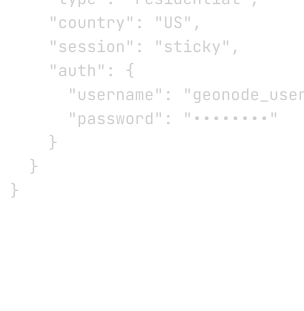
Route any request through a Mauritius residential IP with these credentials.
curl -x 203.0.113.10:9000 -U "user:pass" "http://ip-api.com"Here's how we offer low prices on world-class quality
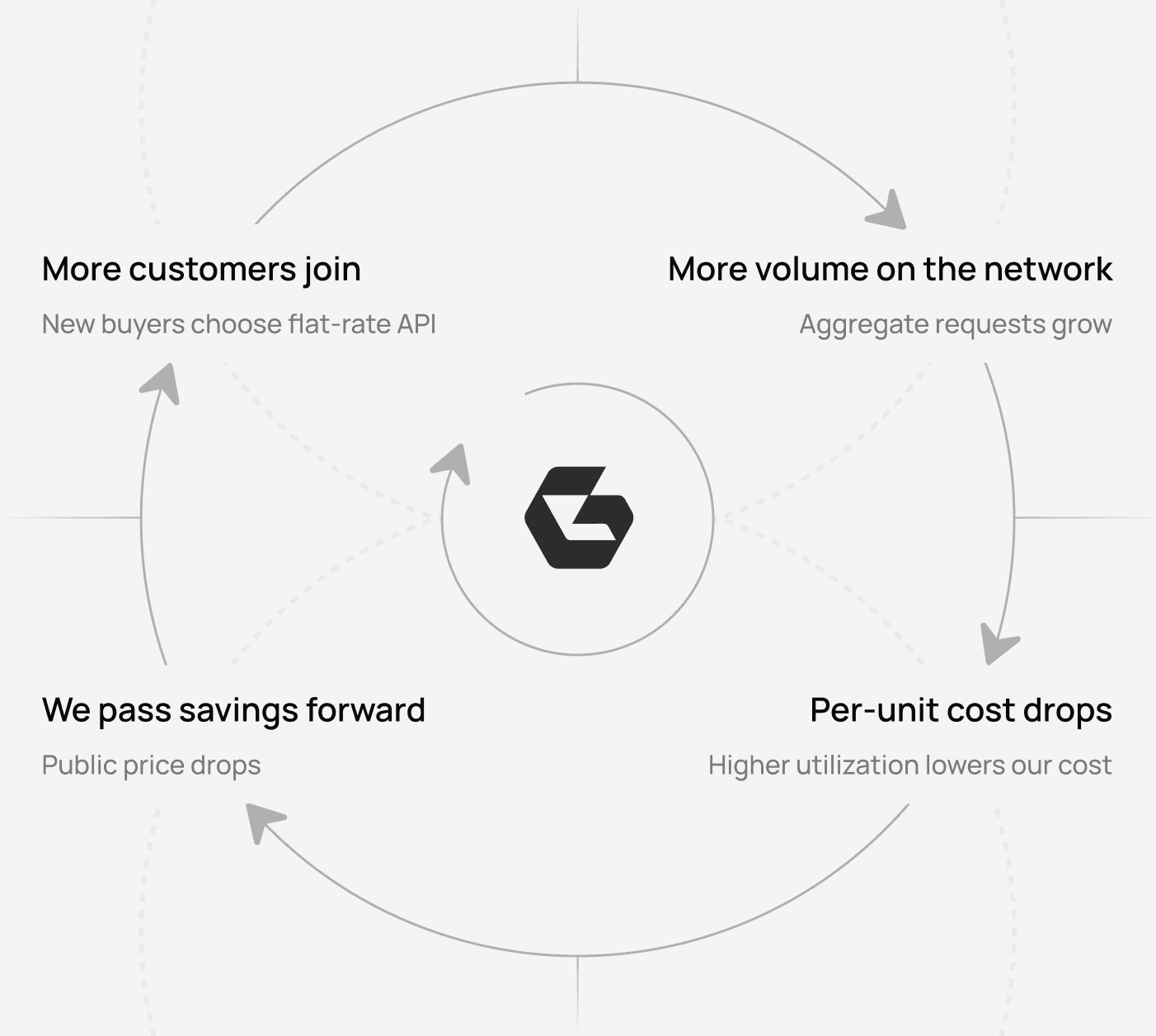
Most scraping APIs run on rented supply with credit-based pricing. That's why your bill is unpredictable. We chose the opposite path and the math compounds.
Legal use of proxies in Mauritius
Using residential proxies may be lawful for legitimate purposes, including market research, ad verification, SEO monitoring, fraud prevention and competitive intelligence on lawfully accessible public data.
Extraterritorial privacy laws like GDPR and CCPA require that any personal-data collection through proxies comply with applicable privacy and data-protection requirements. Scraping behind authentication walls, circumventing technical access controls, accessing non-public data, or copying protected content may be restricted under unauthorized-access, intellectual-property, database-rights and contract rules — stay on lawfully accessible public endpoints.
Geonode IPs are ethically sourced via opt-in consumer apps, including Repocket and Zenshield, with source-side consent and compliance controls.
Not legal advice — consult local counsel for your jurisdiction and specific use case.
Mauritius proxy FAQ
Open your Geonode proxy configuration and select Mauritius when it is available for your product. Copy the generated host, port, full username and password into your client. Keep credentials private and use the setup instructions for your selected product.
Check the locations currently offered in your product dashboard. Country, region and city options depend on the product and available inventory. A location page does not guarantee that every targeting option or a specific number of IP addresses is available.
Use rotation for independent requests and a sticky session when a multi-step workflow needs continuity. Check the supported session settings in your product dashboard. A sticky residential session is not a guarantee of a permanently assigned IP address.
Review the current residential proxy pricing for traffic allowances, billing options and the conditions of your selected plan. Check availability for your required location before purchase. The pricing page is the source for current rates and offers.
Review the evaluation options currently displayed on the product and pricing pages. Eligibility, price, duration and included traffic depend on the offer. Confirm those conditions before signing up or starting an evaluation.
Use the protocol and port generated for your selected product in the dashboard, and confirm that your client supports them. Follow the product documentation rather than copying an endpoint or port from an unrelated proxy example.
Make a permitted test request through the configured proxy and compare the reported exit IP and country with your selected settings. IP-geolocation databases can disagree or lag behind network changes. Check the result in your actual workflow; a location match does not guarantee access to a particular website.
Check your permission to access and use the target data, the target’s access conditions, and Geonode’s Acceptable Use Policy. Do not bypass authentication, paywalls or access restrictions. A proxy connection does not grant rights to content or guarantee anonymity.
Proxies in other locations
Same network, same pricing, different exit country. Every location below runs on Geonode's own IP pool with per-GB billing and no credit system.






Start using Mauritius proxies today
84,210 Mauritius IPs. From $0.27/GB. Running in 60 seconds.
