
How to Fix ERR_TUNNEL_CONNECTION_FAILED
Read the proxy's status code in Chrome or curl, then apply the matching fix, most common first.
Updated
TL;DR
ERR_TUNNEL_CONNECTION_FAILED means Chrome reached your proxy and asked it for a tunnel to an HTTPS site, and the proxy refused. Chrome only reports the refusal; the fastest fix is to check the site's hostname and port, then the username and password the proxy expects.

What the error looks like in each client
Chrome drops the proxy's reply and shows only the code. curl, Python and Java print the proxy's status, and git repeats curl's text.
| Where | What you see |
|---|---|
| Chrome | This site can't be reached. The webpage at https://example.com/ might be temporarily down or it may have moved permanently to a new web address. ERR_TUNNEL_CONNECTION_FAILED |
| Puppeteer page.goto() | net::ERR_TUNNEL_CONNECTION_FAILED at https://example.com |
| curl (most installed versions; the newest show (7)) | curl: (56) CONNECT tunnel failed, response 403 |
| curl (older versions, such as Ubuntu 22.04) | curl: (56) Received HTTP code 400 from proxy after CONNECT |
| Python requests | ProxyError('Unable to connect to proxy', OSError('Tunnel connection failed: 403 Forbidden')) |
| Java HttpURLConnection | java.io.IOException: Unable to tunnel through proxy. Proxy returns "HTTP/1.1 500 Internal Server Error" |
| Firefox (proxy answers 403 or 429) | The proxy server is refusing connections |
Why this happens
Your proxy refused to open a secure connection to the site for you.
For an https:// page, Chrome sends the proxy a CONNECT request naming the site's host and port, and needs a clean 200 back. A 403 from the proxy's rules or a 503 for an unreachable site ends in this error.

Diagnose your tunnel error first
The first two checks need only Chrome; the last two read the proxy's reply with curl.
Open another HTTPS site through the same proxy; if it loads, the proxy refuses or cannot reach only the site that failed.
In chrome://net-export, click Start Logging to Disk, reload, then Stop Logging; at netlog-viewer.appspot.com, the event HTTP_TRANSACTION_READ_TUNNEL_RESPONSE_HEADERS starts with the proxy's status line.
Run curl -x http://USERNAME:PASSWORD@HOST:PORT -w "%{http_connect}" https://example.com (curl.exe in Windows PowerShell); the number printed last is the proxy's reply to CONNECT.
If that number is 407, the proxy wants a login; 403 usually means its rules refused the site, the port or your IP.
Solutions ranked by effectiveness
Work down the cards and stop once the site opens; the third is for scripts and command-line tools.
- Most common fix
Check the site's hostname and port
Applies when the proxy's code is 400, 403, 404 or 5xx and only this site fails. Correct the address you ask the proxy to reach.
Fix hostname typos; the proxy looks names up, so changing DNS servers won't help.
Use port 443 if the site offers it; Squid's defaults refuse CONNECT to other ports.
On a work or school proxy, ask the admin to allow the site or port.
- Check next
Send the proxy its username and password
Applies when curl, Python or Java reports 407 after CONNECT. The proxy got no valid login, so it opened no tunnel.
Copy the proxy username and password from your provider's dashboard again.
Put them in the proxy URL: http://USERNAME:PASSWORD@HOST:PORT.
Rerun the curl check; 200 means the proxy opened the tunnel.
- For developers
Keep local and internal hosts off the proxy
Applies when curl or a script fails after CONNECT only for localhost or internal hosts. Unlike Chrome, these clients send even localhost to the proxy, so list such hosts in NO_PROXY.
export HTTPS_PROXY="http://USERNAME:PASSWORD@proxy.geonode.io:9000"
export NO_PROXY="localhost,127.0.0.1,.corp.example"

curl -sS -o /dev/null -w "%{http_code}\n" https://example.com
curl -sS -o /dev/null -w "%{http_code}\n" https://git.corp.example
Stop the tunnel error from coming back
Four habits that stop a working proxy setup from failing again with this error.
Set proxies per job, not in a shared shell profile that every tool started there inherits.
Do not count on a PAC file's backup proxy; Chrome falls back only when a proxy is unreachable.
Log the proxy's status code with each failed request, so a job's log shows why the tunnel failed.
On your own Squid, add each new client network to an allow rule before you connect from it.
Related errors
Learn more
FAQ

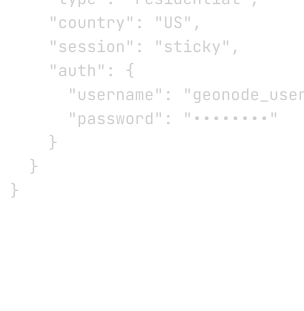
No password on a whitelisted IP
Scripts on a whitelisted IP open tunnels without sending a proxy password.
